Introduction
Introduction to Beijing Tiantan Hospital, Capital Medical University

24/7 health consultation hotline: 59978585
Address: No. 119, South 4th Ring West Road, Fengtai District, Beijing.
View map and transportation routes.
Email: 59978585@bjtth.org
Established in 1956, Beijing Tiantan Hospital affiliated to Capital Medical University (hereinafter referred to as “Beijing Tiantan Hospital”) stands as a leading comprehensive hospital specializing in clinical neuroscience. As a tertiary hospital of Class A, it also serves as the China National Clinical Research Center for Neurological Diseases, the National Center for Healthcare Quality Management in Neurological Diseases, the National Center for Neurological Disorders (Beijing), and serves as a designated site for the National Medical Center under government guidance. Additionally, it is home to the Beijing Neurosurgical Institute, the National Collaboration Center for Neurological Disorders Prevention and Control, and the National Office for Cardiovascular Diseases Prevention and Control. The hospital plays a pivotal role in driving national healthcare reform initiatives, including piloting in the high-quality development of public hospitals, the establishment of modern hospital management systems, the innovation and commercialization of medical science and technology in Beijing, and the development research-oriented inpatient wards. For five consecutive years, it has achieved an A+ rating or higher in the assessments of tertiary hospitals conducted by the National Health Commission.
As one of the earliest publicly-funded comprehensive hospitals established after the founding of the People’s Republic of China, Beijing Tiantan Hospital has consistently adhered to the principle of serving the people wholeheartedly with commitment to the healthcare cause. Over time, the hospital has cultivated a hospital spirit characterized by “integrity in medical practice, relentless commitment to excellence, rigorous pursuit of truth, diligence and frugality”. Its core values embody “devotion, self-sacrifice, a daring spirit of challenge and innovation, staying true to its founding mission and prioritizing life above all else”.
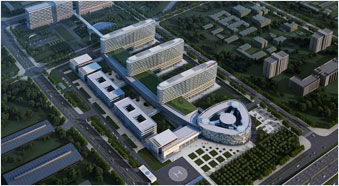
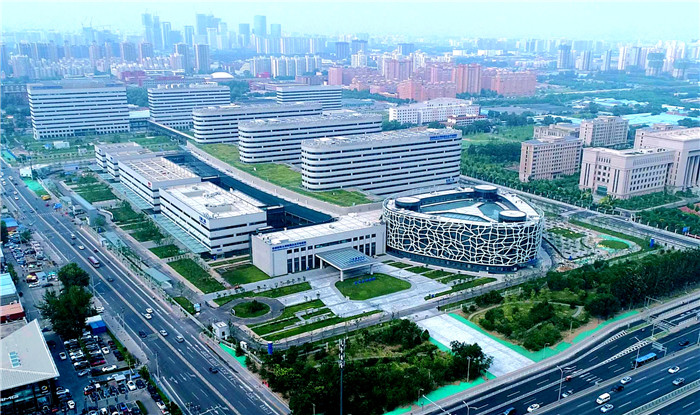
The hospital covers an area of 181,581 square meters with a total building area of 352,294 square meters. It remains steadfast in its functional orientation as a “patient-centered” and “comprehensive hospital with robust specialized departments”. The organizational structure of the hospital departments follows a “disease-centered” principle, comprising 67 clinical departments and accommodating 1,650 beds. A major innovation in the hospital’s service delivery is the Multidisciplinary Team (MDT) model. The 55 MDT outpatient services have markedly improved the diagnosis and treatment of complex and rare conditions, streamlining the process for patients by offering collaborative consultations, thus eliminating the need for multiple visits. Since its relocation to the current site in Fengtai District in 2018, the hospital has served over 2.1 million outpatient and emergency patients annually.
The hospital is committed to the strategic goal of “establishing itself as a national strategic hub in clinical neuroscience.” It has introduced an innovative disciplinary concept of ‘Clinical Neuroscience + X,’ and categorizing its disciplines into “key, advantageous, specialized and basic” to facilitate distinctive, innovative, and sustainable growth across all departments. While striving to build a ‘national-level team’ in clinical neuroscience, the hospital continues to enhance the overall standards of its disciplines. Currently, the hospital has three national key disciplines endorsed by the Ministry of Education, eight national key clinical specialties, and six Beijing key clinical specialties. Notably, neurosurgery and neurology, both national key disciplines and national key clinical specialties, have consistently held top positions in the national academic rankings for many years. Driven by the advancements in clinical neuroscience, disciplines such as imaging, intensive care, molecular pathology, clinical nursing, and neuro-oncology have experienced rapid growth, forming a unique and top-tier discipline cluster at the national level.
The hospital is dedicated to both “high-quality clinical research that rewrites guidelines” and “cutting-edge basic research that reshapes theories”. Driven by advancements in science and technology, as well as the urgency to address major, complex, and challenging conditions, the hospital strives to tackle public health issues and achieve breakthroughs in “stranglehold” technologies. The hospital takes globally leading positions in research on cerebrovascular diseases, brain tumors, and neuro-infection & neuro-immunology, and stands at the forefront of clinical research in China. Notable studies on ischemic cerebrovascular disease and glioma have rewritten the international guidelines for diagnosis and treatment. Over the past five years, the hospital has won one First Prize and two Second Prizes of National Awards for Progress in Science and Technology, ten significant Provincial and Ministerial Awards in science and technology and 30 awards from social organizations. Key research findings have been published in top academic journals, including Nature, Science, Cell, NEJM, The Lancet, JAMA, and BMJ. These groundbreaking achievements have elevated the ‘Voice of China’ and the ‘Voice of Tiantan’ on the world stage of clinical neuroscience.
Over the years, the hospital has adopted a dual strategy of “building the nest to attract the phoenix” and “attracting the phoenix to enhance the nest”, effectively harnessing its talent pool. It prioritizes the cultivation of top-tier talents, discipline heads, and team development, with a particular emphasis on nurturing young talents. Currently, the hospital boasts an impressive lineup of talents, including three academicians of the Chinese Academy of Sciences and the Chinese Academy of Engineering, two Changjiang Scholar, two Young Changjiang Scholar, eight Beijing Scholars, six Young Beijing Scholars, two National Hundred, Thousand and Ten-Thousand Talents, eight Strategic Science and Technology Talents of Beijing, two recipient of the National Natural Science Foundation’s Distinguished Young Scholars award, five recipients of the Excellent Young Scholars award, 20 experts who receive the Special Government Allowances of the State Council, one National-level Overseas Talent, and 12 Beijing Municipal-level Overseas Talents.
As the clinical teaching hospital affiliated to Capital Medical University, Beijing Tiantan Hospital is committed to the principle of “fostering virtue through education”. It strengthens the foundation of educational practices and consistently advances various teaching endeavors to fulfill its role as a teaching hospital. It has established 13 national standardized residency training centers, four specialized residency training hubs, and provided clinical instruction for eight undergraduate programs at CMU. Additionally, the hospital has one national-level excellent postgraduate course and one national-level first-class undergraduate course, and has been designated as a National Experimental Teaching Demonstration Center. The hospital is accredited to offer 18 doctoral degree programs and 30 master’s degree programs, with 247 graduate supervisors, including 132 doctoral supervisors (among them, 11 junior doctoral advisors).
For many years, Beijing Tiantan Hospital has actively shouldered its social responsibilities by fulfilling medical aid tasks, including combating the COVID-19 pandemic, disaster relief efforts, and providing assistance to Xinjiang Uygur Autonomous Region and Xizang Autonomous Region. The hospital has been rewarded multiple honors, such as the National Civilized Unit, the National Exemplary Primary-level Party Organization, and the National Advanced Collective in Foreign Medical Aid. Furthermore, several individuals from the hospital have been recognized for their exceptional contributions, earning titles such as National Exemplary Individuals, Outstanding Healthcare Worker in the Spirit of Wang Zhongcheng and recipients of the National May 1st Labor Medal.
Exploration ignites hope while innovation carves the path to the future. Currently, the hospital has embarked on its third transformation, transitioning from “a pioneer in neurosurgery, distinguished by a cluster of neuroscience specialties” to “a national strategic hub for clinical neuroscience”; from ‘a comprehensive hospital with robust specialties’ to ‘a prestigious comprehensive hospital, bolstered by strong specialties and sub-specialties’; and from a local healthcare center to an internationally renowned medical institution. This transformative journey propels the hospital towards high-quality development.
Looking ahead, guided by Xi Jinping Thought on Socialism with Chinese Characteristics for a New Era and under the leadership of the Hospital’s Party Committee and, the hospital will fully implement President Xi’s important directives on health affairs, as well as the Four Orientations (oriented towards the global frontiers of science and technology, national economic development, the major needs of the country, and the health and safety of the people) in technological innovation. Focusing on the health of the people, with an emphasis on meeting the needs of public health and disease prevention in China, the hospital will uphold and promote the noble spirit of “giving priority to saving lives with total devotion and ultimate love”. The hospital will continue to implement its comprehensive blueprint. This encompasses ‘two disciplines & two institutes, four hospitals as one alliance, and six supporting platforms’, ensuring steady advancements in its transformation and pursuit of excellence. It will march towards its goal to become a “national strategic hub for clinical neuroscience”, establish itself as a world-class research and innovation hospital, and to shine brightly in the realm of life and health sciences.